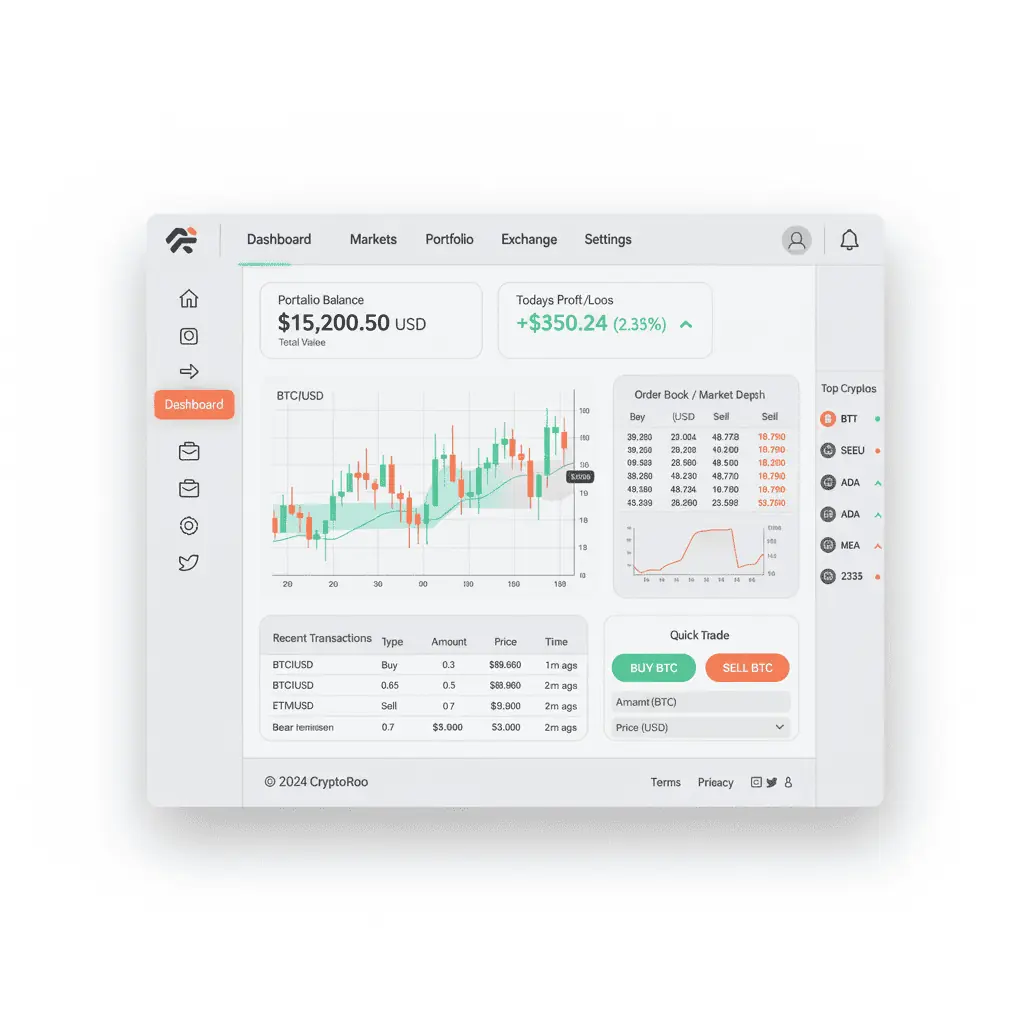
BEST CRYPTO
EXCHANGES

Beginner’s guide to choosing a crypto platform

Choosing a reliable crypto exchange is the first step toward safe and successful trading.
In this guide, we review the top platforms based on security, fees, features, and ease of use.

WHAT IS CRYPTO EXCHANGES?

Crypto exchanges are where cryptocurrency trading happens, but they’re more than marketplaces — they’re the core of how digital assets move and gain value. Knowing how they work and differ helps you make smarter, safer choices in the crypto market.

CRYPTO KNOWLEDGE
FOR EVERYONE

CryptoRoo is dedicated to providing clear, unbiased information to help you navigate the world of digital currencies.
Our content is tailored to curious minds of all levels, from crypto beginners to seasoned enthusiasts.
Join us on the journey to better understanding the future of finance.
CENTRALIZED (CEX)

Run by companies like Binance or Coinbase that handle trades and store your funds securely.

DECENTRALIZED (DEX)

Peer-to-peer systems where you keep control of your crypto — like Uniswap or PancakeSwap.

HYBRID EXCHANGES

Blend the best of both — CEX security and DEX control — offered by platforms like KuCoin or OKX.

THE BEST
CRYPTO EXCHANGES

Find trusted platforms to buy, sell, and trade cryptocurrencies securely.

How we choose
the best exchanges

Security & Transparency

Fees &
Accessibility

Global Support & Features

FAQ

How do I choose the best crypto exchange?

Look for security, ease of use, low fees, and strong liquidity. Exchanges like Binance, Coinbase, or Kraken are popular because they’re regulated, transparent, and offer a wide range of crypto assets.

Not always. Centralized exchanges (like Binance or Coinbase) offer better usability and customer support but require you to trust them with your funds. Decentralized exchanges (DEXs) give you full control of your crypto but demand more technical knowledge.

Most exchanges charge trading fees (0.1–1%) and sometimes withdrawal fees. Some offer discounts for using their native tokens. Always check the fee schedule before trading — it can make a big difference in long-term profits.

Yes — many traders do. Using multiple exchanges lets you access different coins, take advantage of price differences (arbitrage), and reduce risk if one platform faces downtime or restrictions.

Most top exchanges require KYC verification to comply with global regulations and prevent fraud. This means you’ll need to provide an ID and sometimes a selfie before trading or withdrawing funds. However, some decentralized exchanges (DEXs) allow trading without KYC, offering more privacy but less regulatory protection.